Top 3 Best Business Ideas For Every Aspiring Entrepreneur For 2022

Being your own boss sounds just so enticing that most people leave the corporate world to start their own business. With the promise of time flexibility, an ideal effort-to-income proportion, and the chances of limitless growth, more and more individuals are venturing into the business scene and tinkering with their entrepreneurial instincts.

If you have been considering starting your own business but don’t know where to look for ideas, then this should be a good read.

Make Money from your Hobbies

There’s probably nothing more fun than making money from something that you already enjoy doing for free. Hobbies such as photography, sewing, cooking, and even gardening are a few niches that can turn into promising businesses. The key is making time to learn beyond the basics and to hang out with people who can help you improve your hobby and turn it into a moneymaking craft. If you simply like taking photos, then you may want to take extra photography workshops and become an events photographer in the long run. Occasions like birthdays, showers, and weddings happen all year round so if you take it seriously, your hobby may just land you frequent bookings for the whole year.

Craig Jenkins-Sutton, the owner of Topiarius, considered himself a green thumb and did gardening only as a hobby. He had no formal landscape training but his love for designing gardens has turned into a business with average annual revenue of $1.2 million. Megan Duck had a similar story from sewing. From her first project of sewing ornate linings for the coffins of her employer’s Halloween décor to the silk chandeliers that she made for The Mirage in Vegas, her average annual income from her sewing and rental business is now at $6 million. Both have been featured on the site Entrepreneur.com, and they continue to inspire new breeds of entrepreneurs across continents.

Turn your Network into a Pool of Talents

The 21st century has definitely changed the business landscape in terms of offshore and outsourced projects. From BPOs building operations facilities in Asian countries, to Western brands banking on offshore talents for services like accounting, design, translation, IT jobs, etc., you cannot argue that there is indeed a growing demand for a diverse and competent workforce who can get the job done without having to think of added operational expenses and employee benefits.

If you are one of the rare people who have quite a diverse network of skilled people, then this simple “advantage” can be turned into a thriving business. Third party vendors like agencies are becoming lucrative businesses because they bank on a local pool of talents those offshore providers are looking for. For instance, if you are an engineering major, you may have a lot of connections with a similar crowd. You may find it surprising that there are actually dozens of real estate companies who are looking for freelance teams who can do structural drawings and renderings on their behalf. A lot of Japanese, Chinese, and Korean students also run online to find English teachers who can teach from home. If you have friends or relatives who fit the bill, then you may want to connect them with these students. The trick is finding legitimate providers and matching them with the skills of the people who are already in your existing network. Just be sure that all terms and fees are set at the beginning to maintain a smooth and professional workflow for everybody. Remember, you want to build bridges while helping people and earning in the process. The last thing on your list is a fatal mismatch that can give your “agency” negative publicity. If your “hires” provide quality service, then referrals can come pouring in. Good output always translates to better business transactions.

A Pocketful of Passion

Most of us have passions. Genuine passion means loving something on a deeper and more profound level than just a hobby that you simply enjoy. Some develop a different passion for vintage cars and end up with an auto shop that specializes in car restoration. Your passion for instruments or the performing arts such as dancing, acting or singing can be turned into conceptualizing a small school where you can help more people share and develop the same passion as yours.

Terry Finley had an intense passion for horse racing which prompted him to buy his first horse at $5,000. With a lot of learning and advice from the pros, he has managed to build a business with 55 syndicated horses and 550 investors who also earn when their chosen horses are sold, bred, and even when they win those infamous horse races. Terry has mastered the art of the trade and decided to share his passion with the same people who loved the things that he was into. In the process, he was able to start West Point Thoroughbreds, a label that now earns around $6 million annually.

While being an entrepreneur takes a lot of technical strain in terms of cash flow, permits, and marketing strategies, newbies have to realize that they definitely need to start somewhere. They can start small, but at least take the first step and test the waters with one foot. Starting a business and building a label empire does not happen overnight but when you start to take off, you’ll realize that you’ve built a business that will be positively rewarding even after retirement age. By then, you’ll realize that those paperwork, sleepless nights, and zero months have finally become worth it.
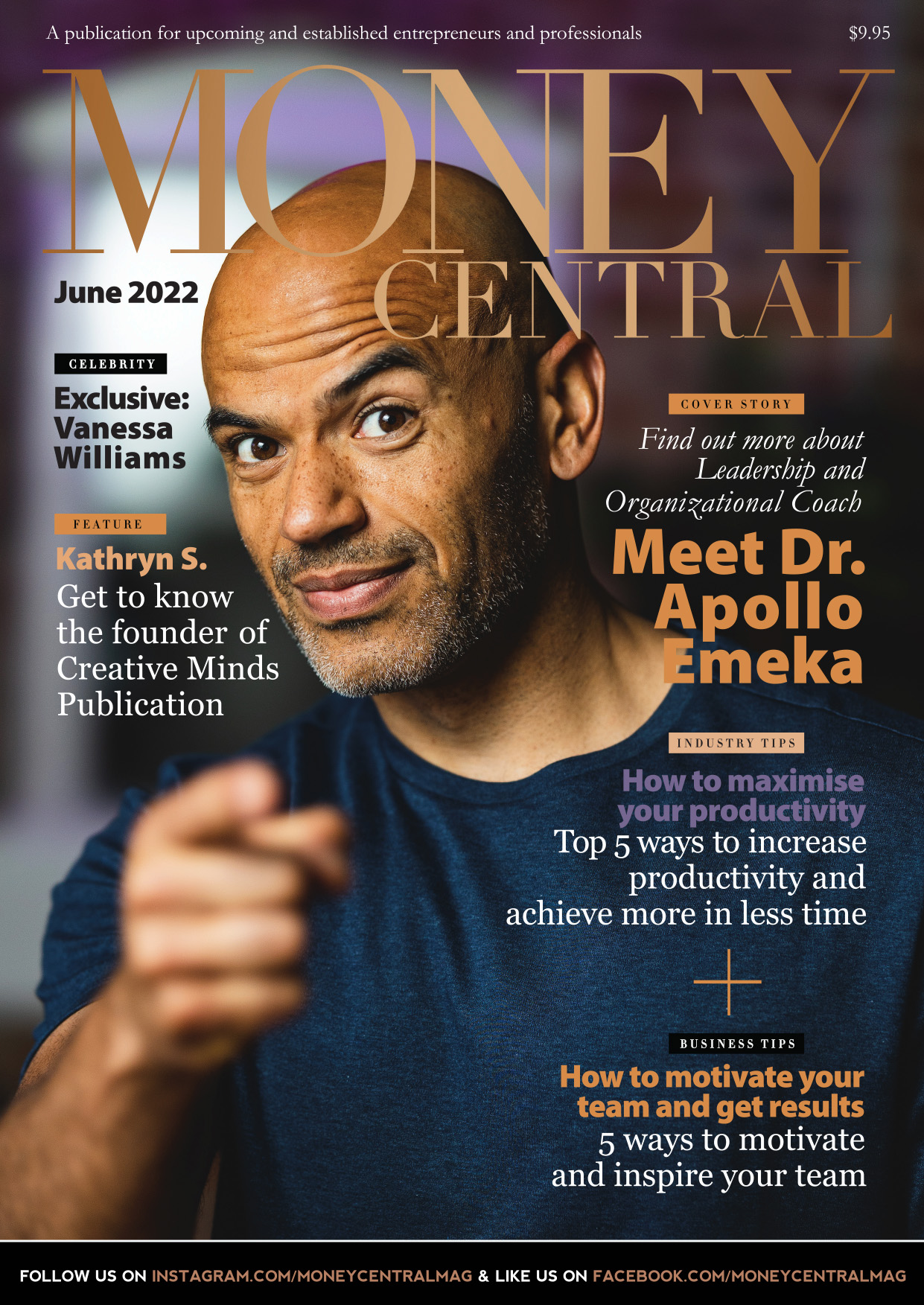
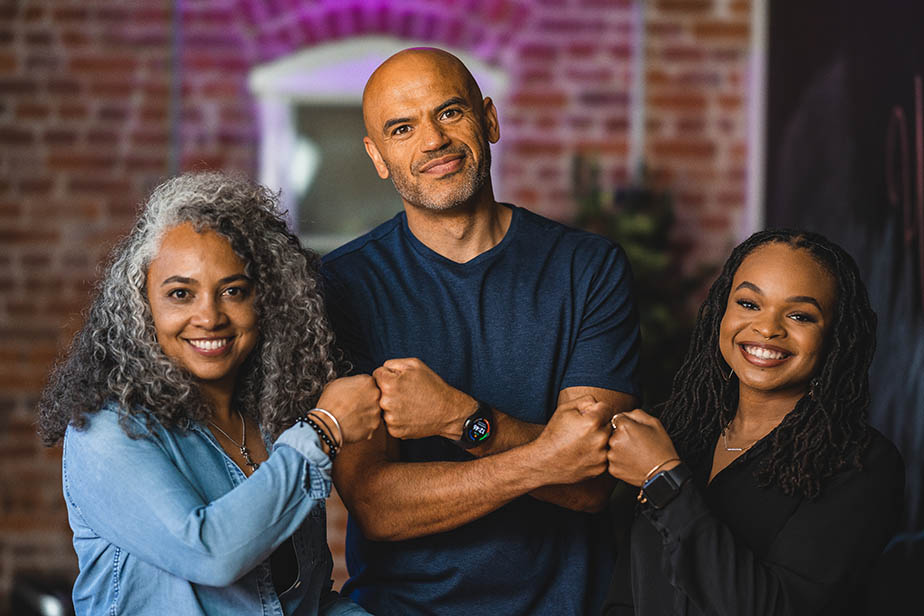
Meet The Entrepreneur Behind The Cover Of The June 2022 Issue Of MoneyCentral Magazine: Dr. Apollo Emeka

Dr. Apollo Emeka is a leadership and organizational coach and consultant with a vision to see everyone reach their full potential for good. If you saw Apollo as a kid, you probably wouldn’t expect he’d grow into the type of guy who’d be fortunate enough to start, grow, and run his own business. In fourth grade, he essentially stopped going to school and officially opted for the GED at 17 years old. Few would have thought he would ever earn a doctorate, join the FBI, become a Green Beret, or become a successful entrepreneur.

Apollo continuously took unconventional and sometimes counterintuitive steps to achieve success. He distilled what he learned as he reached milestone after milestone and distilled it into a system that helps others achieve seemingly impossible personal and professional feats. Apollo is the ultimate coach, consultant, and accountability partner to help high-performers stay focused on the strategies and actions they commit to.

MoneyCentral Magazine recently caught up with Apollo to discuss his journey in the industry, and here’s what went down:

Could you please tell our readers a brief background about yourself and how you became a leadership and organizational coach?

Growing up, I didn’t go to many schools and never graduated high school. Despite my unconventional start, I had ambitious hopes and dreams. I knew if I had any chance of accomplishing greatness, I’d have to do it unconventionally. By the time I was 36, I had accomplished nearly everything I had set out to do when I was 18.

I battled my way through community college, then went on to earn a BA and a doctorate from USC. I served in the FBI for six years; I became a Green Beret and did Special Forces work worldwide, built and sold a business, and started a family. My ability to accomplish so many big tasks in such a short time frame drew the attention of a friend and fellow entrepreneur, Chris, who asked me to consult on his business. That was 2016, and he was my first client. I’ve always had a passion for growth and performance improvement, but it was Chris who helped me see that I could build another business out of that passion.

Is there a particular moment that comes to mind when you realized leadership coaching was your calling?

Some leaders energize and empower teams, and other leaders create chaos and stress. Like most people, I’ve worked for both types of leaders, which made me understand the impact leadership can have on people and outcomes within organizations.

When I attended the Special Forces qualification course, I learned how transferable leadership skills are. I came out the other end of that 15-month course completely transformed. I figured if I could learn all of these skills, anybody could. I carry the philosophy into my own company and help other entrepreneurs embody the same skills.

How did you get into this line of work? What qualifies you to be a leadership and organizational coach?

Coaching is such a strange profession right now. There are coaching certifications you can earn in a matter of hours online and others that take months of study, in-person meetings, and supervised coaching sessions. But I believe that anyone can be a coach in areas where they are knowledgeable.

Every single member of a Special Forces team is a coach in their areas of expertise. My specialty was communications, so I regularly coached my teammates on radio operations. I’d also get coached by our medics on things like hemorrhage control and get coached by our engineers on the safe handling of explosives. I believe that what qualifies one to be a coach is the proven experience in impacting the desired outcomes of the person they are coaching. And that if you are a member of a team that has skills that others don’t, it is your obligation to coach them.

So, what qualifies me to be a coach? I have a track record of personal accomplishments despite daunting obstacles. I’ve built and sold a business, I’ve coached across language and cultural differences worldwide as a Green Beret, and my doctoral work focused on organizational development and leadership. Every time I help clients achieve their goals, I become a little more qualified. Being a great human is all about continuous learning and development. Coaches have an even greater obligation to continuous improvement. I never stopped learning.

What are some primary issues that you see your clients going through?

All of our clients want to shift their team culture to incorporate diverse perspectives and generate high-performance results. Their challenges range from managing change and its fear to understanding what skills and systems will drive high-performance. Even as teams become more diverse, the status quo is a powerful cultural force that prevents diverse perspectives and ideas from being leveraged to their fullest potential. As a result, innovation efforts fall flat, things feel overwhelming, calendars are packed, and organizations plunge into a reactive fire-fighting mentality. Our services are designed to help our clients overcome these challenges and achieve consistent success.

What is the most difficult part of your job?

The most difficult part of the job is also the most fun. Unlike most coaching and consulting agencies, our goal is to build capacity within the companies we work with. We’re not trying to be the smartest people in the room; instead, we aim to help our clients become stronger, better, faster versions of themselves. When clients have a growth mindset, their ability to generate high-performance results improves quickly and dramatically. On the other hand, working with some clients feels a bit like trying to coach a couch potato to run a marathon. It doesn’t do any good for us to run the marathon for them. But that’s also the fun part because everyone gets super pumped when the couch potato not only crosses the finish line but becomes a motivator and coach themselves. That’s a cultural shift!

Another big challenge is that we are committed to outcomes, not deliverables. We don’t get tunnel vision on completing a deliverable at all costs, even when we know it won’t move the needle. We stay focused on the desired outcome and constantly engage in reflection and retrospection with our clients to understand how we need to pivot our activities to get the results we all want.

What form of marketing has worked well for your business throughout the years?

I take two approaches to marketing: passive and active. Our passive efforts consist of thought leadership content. We’ve gotten a surprising amount of business from videos and blog posts that resonate with people.

My active marketing approach is hyperfocused networking. I’m not talking about going to the Chamber of Commerce meeting and swapping business cards, then having ten lunch meetings to keep in touch. I have a list of companies we want to work with, and I actively ask happy clients and close personal connections to make introductions with the pretext of working together. I’m surprised by how few people take this direct approach. It’s how we’ve generated the bulk of our business.

What is the toughest decision you had to make in the last few months?

In the last few months, we had to make the tough decision to end our work with a client once I realized our values weren’t in alignment. Our company values are courage, inclusion, authenticity, intention, and growth, and we take them very seriously. This client didn’t display the courage necessary to generate the ambitious results they said they wanted. It felt like we wanted to hit their goals more than they did. It also became painfully clear that this client was not committed to inclusion which is inconsistent with the makeup of our company and the vision of the world we seek to co-create.

We don’t expect the companies we work with to mirror our values. We look for companies with complementary values that create magical synergies to foster close working relationships and create mind-blowing results. That type of synergy is what we have with the rest of the leaders and teams we work with.

What new business would you love to start?

I’m completely obsessed with our current business, and I’ve prioritized exciting ways we’re going to grow and expand to serve more people even better.

That said, if I were starting a business today, it would probably be in the mental health space. Emotional intelligence is so important, and most people are never explicitly taught how to develop it. Couple that with the increasingly complicated nature of just being a human, and you get a massive market need and an opportunity to do some real good in the world.

What is the best advice you have ever been given?

The selection process for Special Forces is a physically, mentally, and emotionally daunting three-week event. On the first day of selection, a crusty old medic with a thick Boston accent addressed around 500 other soldiers hoping to qualify for Special Forces and me and said, “I know you’re all here because you think you want to be hard. But there’s hard smart, and there’s hard stupid. If you’re about to hurt yourself or get injured, just stop and come see me.” He paused a moment and then exclaimed, “Don’t be hard f***ing stupid!”

That quote really hit me. I hear that thick Boston accent every time I think that I might be pushing myself too hard. You can’t fight if you’re broken!

What advice would you give to a newbie Entrepreneur setting up their first business?

People tend to focus too much on admin and operations early in the business formation stage. Like, “Should it be an LLC or an S-Corp?”Or, “What kind of software should I use?” The only thing you should be thinking about early on is, “How am I going to create massive amounts of value?” It means finding a big problem you can solve for someone or a massive opportunity you can seize.

If you can create an opportunity for someone to save or gain $10 in value, you can easily charge them $1. That math works into the millions. If you can create an opportunity for someone to save or gain $10million in value, you can charge them $1million. Before you think about what you’re going to sell, identify a target market and talk to them about their challenges and hopes. Once you’re really clear on the size of the value there, you can start building your product or service to create massive value and capture a portion of that.

Top 5 Things All Small Business Owners Should Be Doing Every Single Month

At the end of each month, every business owner should be reflecting on what they have accomplished and then planning for the next month’s success. This applies to both their personal and professional lives.

If you’re a business owner wishing for an even more successful year, consider adopting each of the things every business should do listed below.

1.    Recognize Your Value Drivers

One of the main points of small business must-haves is understanding your value drivers. Understanding what resonates with your audience, whether you’ve been in the company for five months or five years, is a significant element in deepening engagement, brand loyalty, and repeat buyers, readers, or watchers. Knowing what works doesn’t feel evident at times, but don’t scrimp on the facts.

Examine your previous six months of business—where did your clients or viewers come from? Which of your products, services, or blog posts was the most popular? Make a comprehensive list of all the places you collect data, such as social media, email marketing, accounting software, and your website.

2.    Create Client Personas

You’re in a better position to revisit your dream customer now that you have a more profound knowledge of your value drivers. You most likely did this to some level when you first started your firm. However, as you gain experience, your clientele will alter and adapt. In those first few years, you learn a lot and have a much better feel of who your primary consumer is.

3.    Refresh Your Digital Presence

Now that you’ve got an amazing idea of who your ideal customer is, it’s time to align your digital presence accordingly. Your social media, website, and message come in the list of things needed to start a business. All should be entirely consistent with your primary mission, target audience, and overall business objectives. If you’ve been in the game for a long, or if you’re swiftly developing a better understanding of your target audience, it’s time for a refresh.

4.    Invest in the CEO

One of the best things every business should invest in is the boss. As a business owner, it’s tempting to place yourself at the bottom of the priority list. You’re a one-woman show for many of us, the Chief Do-er, planner, Executive Assistant, and so on. When that is the case, and everything relies on you, it is even more critical to invest in yourself.

You are your own company. This can take a variety of forms, but now is a good moment to consider what investing in your company’s CEO entails. It might indicate that you’re ready to set new boundaries.

5.    Carry Out Your Accounting

Nothing is worse than arriving at the end of the year and having to slog through an entire year’s worth of accounting in one sitting. Adding this to your business monthly checklist will make your future self pleased. Sign up for Quick books and establish a separate bank account and Paypal account to keep your company and personal costs separate.

If you plan to sell anything on your website, you should use a separate payment gateway such as Stripe. Use a scanning app to scan your actual receipts as soon as you get them. Make accounting files separated by year, then a month.

Final Thoughts

Hopefully, the things listed in this article can assist you in developing and implementing successful plans to help your company succeed this month. The stronger these five variables are, the more likely you are to succeed.

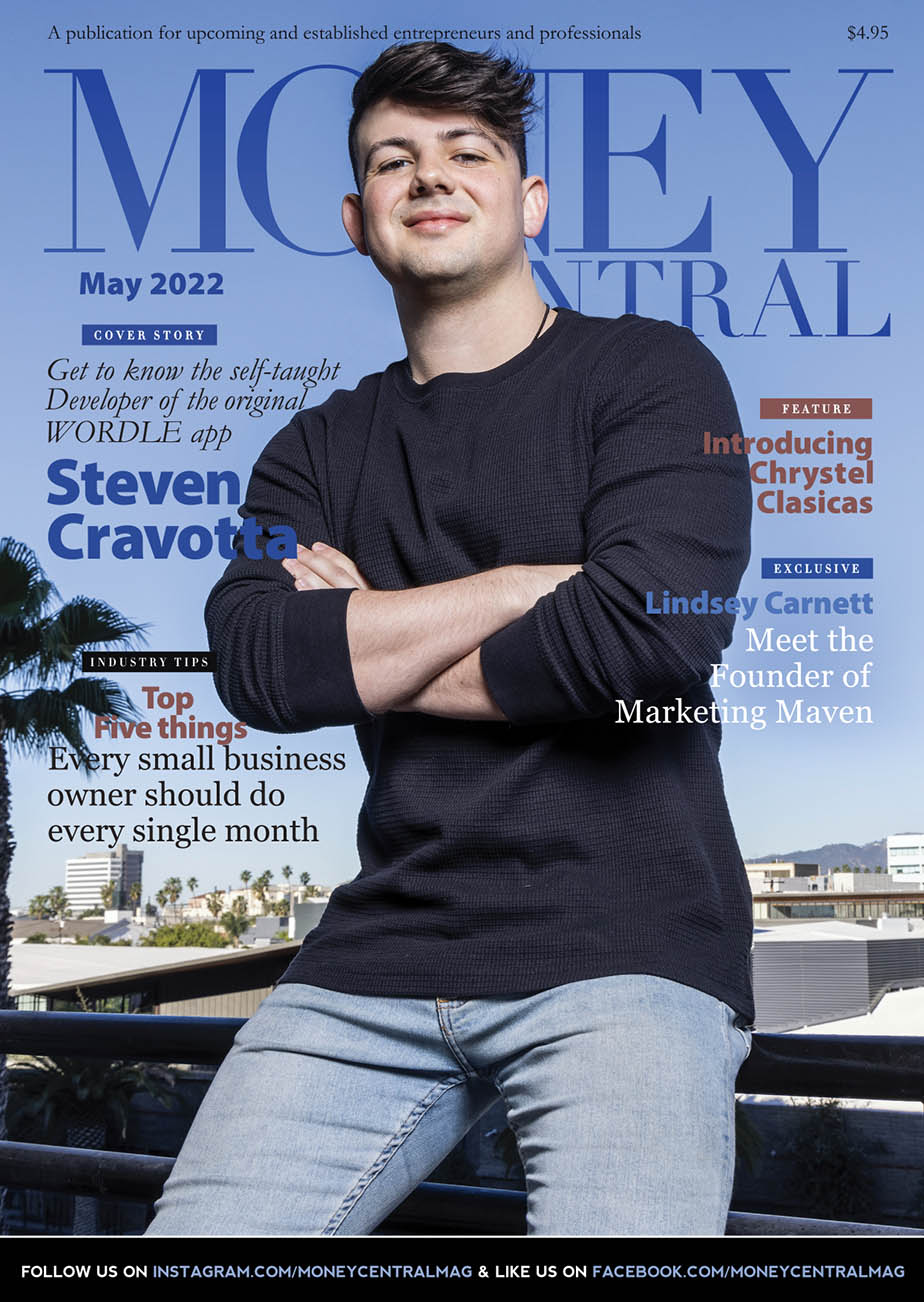
Meet The Entrepreneur Behind The Cover Of The May 2022 Issue Of MoneyCentral Magazine: Steven Cravotta

Steven Cravotta is the self-taught creator and developer of the original Wordle app, a word-based puzzle app he uploaded to the Apple’s App Store when he was 18. He eventually abandoned the entire project because it averaged merely one or two downloads per day in the four years since he uploaded the app.

Fast forward to last December; after checking the app’s stats, he shockingly noticed it had 500,000 downloads in just five days! After investigating the source of the spike in downloads, he realized that thousands of people looking for the web-only game “Wordle,” created by software engineer Josh Wardle, were downloading his app by mistake.

“I was doing one-two downloads a day, and then all of a sudden, a couple of weeks ago, I checked my developer dashboard, and the graph just went vertical, and I was getting 50,000 downloads every day,” Cravotta told ABC News.

Instead of keeping all the proceeds for himself, Cravotta reached out to Wardle and offered to team up with him to impact the world positively. Cravotta decided to donate $50,000 of the app’s revenue to Boost West Oakland – an organisation that provides free tutoring and mentorship for children in Oakland, Calif.

MoneyCentral Magazine recently caught up with Steven to discuss his journey in the industry, and here’s what went down:

What are you currently doing to maintain/grow your app?

Currently, I am marketing Puff Count on TikTok. I make videos educating viewers on the dangers of smoking nicotine and then offer a solution to help them quit. You can check out my TikTok account here: www.tiktok.com/@puffcount.

What social media platforms do you usually use to increase your brand’s awareness?

TikTok, Instagram, and YouTube are all platforms I utilize to increase Puff Count’s awareness. TikTok has been the most successful platform thus far.

What is your experience with paid advertising, like PPC or sponsored content campaigns? Does it work?

In my opinion, paid advertising is getting less and less effective every year. Apple’s new privacy updates have made tracking users exponentially harder, which is a great thing for privacy, but bad news for paid ad platforms.

What is your main tactic when it comes to making more people aware of your app and engaging your customers? How did your app stand out?

My main tactic is posting as much content as I can on TikTok. Creating TikToks costs me virtually nothing but my time, so my customer acquisition cost is $0. Puff Count stands out from the crowd because, unlike other quit smoking apps, it will guide you through the process of reducing your usage to make quitting more achievable.

What form of marketing has worked well for your app throughout the years?

Organic marketing has worked well for all of my mobile apps. Because the margins on mobile apps are slim, you have to get creative in the way you market.

What is the toughest decision you had to make in the last few months?

Removing the paywall from Puff Count. I want to make quitting nicotine accessible for anyone and everyone who wants to, and that requires me to make Puff Count a completely free application.

What money mistakes have you made along the way that others can learn from (or something you’d do differently)?

There are no mistakes, only lessons. I learned that your product would never be perfect; you just have to keep moving fast and listening to customer feedback.

What new app would you love to start?

Something in the Web3 / Metaverse space.

If you could go back in a time machine to the time when you were just getting started, what would you do differently?

I would post even more on TikTok in the early days when it was easier to go viral.

What is the best advice you have ever been given?

Bet on yourself.

What advice would you give to a newbie Entrepreneur setting up their first app?

App development can be expensive. Try to set up an MVP and get initial user feedback before investing all of your time and money into an idea.

Top 5 Ways To Raise More Funds For Your Business In 2022

Finding the required capital to build their enterprises is one of the most challenging issues entrepreneurs confront. Startups must cope with various charges, whereas established organizations must fund development and working capital. Because money does not grow on trees, you may fund your business in multiple ways.

We will love to see your business flourish and make a big difference, which is why we’ve listed five specific ways to raise more funds for your business in this article.

1. Bootstrapping

Bootstrapping is a popular way to raise money for a business. This entails gathering together any personal assets you may obtain to fund your firm. Using what you have rather than borrowing or generating money is a good strategy in many circumstances. In fact, several entrepreneurs continue to bootstrap their businesses until they become successful.

This can be advantageous since it eliminates the need for large loans and monthly payments. Investing some of your own money generally makes investors and lenders more inclined to cooperate with you.

2. Family And Friends

If your money is insufficient, you can turn to those closest to you. Before pursuing external finance, this is frequently a practical first step. Because they are less likely to demand tight repayment conditions or high-interest rates, family members and friends may be simpler to persuade than anonymous lenders. They are the best sources of funding for the business.

Borrowing from friends and relatives entails its own set of dangers. Your connections may suffer if the enterprise fails or takes considerably longer than expected to return the debt. Before approaching your friends and relatives for funding, you should complete a business strategy. In this manner, you can explain exactly what you’re doing and how you’ll generate money for them.

Ensure that you have all of the loan conditions written out. This contains the amount you are receiving, the interest rate, and the needs and deadline for repayment.

3. Angel Investors

Angel investors can also help you to raise more funds for your business. Angel investors are groups or individuals that put their own money into the enterprises of others. They stand apart because they prefer to invest in firms in their early phases of development and are constantly on the lookout for the next business to invest in.

Angel investors have backed many of today’s most successful technology businesses, including Yahoo and Google. An angel investor is regularly somebody who has made progress in one region and looks for new possibilities in a similar field or different organizations. Angel investors might not only provide funding to get your firm off the ground, but some may also opt to advise you. They may also use their current industry relationships to open doors for your company.

4.  Crowdfunding

Since the 1990s, businesses have used the internet to promote and sell their products. However, during the previous ten years, the internet has also become a new source of finance, and it has become one of the most acceptable methods to raise more funds. This allows you to obtain cash from websites where investors worldwide may support your business.

You will be asked to start a campaign, set a fundraising goal, and provide rewards for donors who pledge a particular amount of money, such as early access to items, discounts, etc. You then generate funds for the campaign over a set period.

5.  Loans

Banks and other financial entities can provide loans. This is one of the oldest ways to raise money for business growth; however, many people dislike it. To obtain a loan, somebody may ask you to demonstrate that you have begun developing traction and making money. You may also be required to show a thorough business strategy.

Lenders can be confident in your capacity to repay loans, including interest, based on your company’s financial projections.

Final Words

There are several ways to raise more funds. Entrepreneurs must assess the pros and drawbacks of several funding alternatives to determine which one offers the most flexibility at the lowest cost. There are several choices for funding your business, so don’t be disheartened if one does not work out. You may quickly get the financing you need to take your business to the next level by exhibiting diligence and resourcefulness.

5 Surefire Tips To Set Yourself Up For Success Every Single Day

Do you feel unsatisfied with your life or career? Maybe you’ve been on the road for years that just doesn’t seem right. Take some time to think about what is most important to you. Whatever your definition of success is, there are some daily routines that might help you attain it. Success, on the other side, does not come without work. When we have a good attitude, we can do so much more. Here are five things that will set yourself up for success every day.

1.    Make A Morning Ritual For Yourself

Creating a morning routine that you complete every day upon awakening is one of the most efficient strategies to set yourself up for success every day. Choose activities that will help you feel focused and balanced so that you may start your day from a position of inner peace (Yoga, Breathwork, meditation, journaling, and stretching are great ones to play around with.) Your morning routine might last as little as five minutes or as long as an hour.

2.    Consume Healthy Foods Throughout The Day

That’s not to mean you should abandon your good eating habits after breakfast. While there is no such thing as a perfect diet because everyone’s body is different, it’s safe to say that most of us function best when we consume a lot of plant-heavy, unprocessed meals. Add healthy foods daily routine to become your best self.

3.    Follow A Schedule

Set limits on how much time you spend working and, more significantly, avoid working every day as much as feasible. Its obvious that set goals and achieve success. Make time to exercise, meditate, cook, spend time with loved ones, get some fresh air, and do whatever else is essential to you. This will make you more efficient and effective when you spend time at your desk and help you to set yourself up for success.

4.    Avoid Procrastination And Multitasking

Concentrate on one activity at a time and give it your undivided attention. Put your phone in another room when you’re working, so you’re not tempted to check social media. Don’t check your email when you’re out with pals. As a consequence, you will feel a lot more productive and empowered.

5.    Move Around Often

Moving your body may provide you with the energy and confidence you need to succeed in all aspects of your life. You don’t have to spend hours at the gym every day; focus on one sort of action that you love and stick to it.

Taking pauses during the workday to go for a bit of stroll around the block can help give your mind a rest and refresh your body. Often, the best ideas arrive when you’re on the move and away from the computer. Moving around is the best way of setting up for success.

Final Thoughts

Make the productivity mentioned above ideas a part of your routine. Practicing these consistent behaviors will assist in setting the tone for a good day. If you follow these suggestions, you will notice your physical and emotional health benefits. We are confident that these suggestions will help you live a better life.

The City of Sydney and NSW Government are planning to help small business owners bounce back from the pandemic

Experts from some of Australia’s most established and fastest-growing companies have joined forces with the City of Sydney and the NSW Government to help small businesses, creatives, retailers, and hospitality owners bounce back from the pandemic.

The City, in partnership with the State Government, is hosting a series of nine webinars that will guide businesses on how to sell online, create cost-effective branding solutions, and use the big platforms to accelerate growth.

The Reboot 2022 Small Business Series kicked off on the 29th of March and featured experts from some of Australia’s most successful companies including RedBalloon, Shop You, news.com.au, and Eucalyptus.

Lord Mayor Clover Moore said the initiative will help support businesses to develop new, innovative ways of thinking and working to ensure they can prosper and grow post-pandemic.

“The past two years have been extraordinarily challenging for our retailers, businesses, and the hospitality sector and recovery will take time, adaptability, and the willingness to consider new ways of doing business,” the Lord Mayor said.

“We’ve engaged industry experts and developed a series of webinars that will help these businesses to upskill, learn and navigate a path forward in a post-pandemic world.”

With a focus on digital content skills and growing customers and brands, the webinars will provide inspiring stories and practical examples to help businesses learn, innovate and grow in 2022.

The Reboot series is proudly supported by the NSW government’s Business Connect program which provides advice and support to help businesses get off the ground, adapt and grow.

Minister for Small Business Eleni Petinos said the partnership between the City of Sydney and the NSW Government will expand opportunities for small businesses to access support through the Business Connect network.

“Small businesses are the lifeblood of the economy, their importance in providing jobs and services to the local community cannot be overstated,” Ms. Petinos said.

“Business Connect has helped almost 44,000 businesses since the program began in 2017. It provides a network of accredited business advisors who provide expert, professional and independent advice on how to run a small business.

“With webinars on topics such as driving growth and nailing your marketing, the Reboot series is highly relevant for small businesses as they move on from COVID-19 restrictions and the challenges of the past two years, including the recent floods.”

The series includes:

Brand Building, Naomi Simson, co-founder, RedBalloon

Content that drives clicks – Lisa Muxworthy, editor-in-chief, news.com.au 

26 April, 12 pm–1 pm 

Creating content and getting your content out there is not easy. Learn to build an audience and create content that drives attention and customer conversions, which content drives the biggest click-throughs, and how to pitch to media.  

How to create storytelling content that really connects – Wayne Quilliam, Aboriginal artist, and digital creator  

3 May, 12 pm–1 pm

In a digital world, storytelling is the stuff high-growth brands are made of. To stand out, a great brand, product or service is not enough. Learn the importance of stories in the digital world, how businesses create their stories and how to translate stories into imagery and video online to capture attention. Nailing your marketing mix – Sandradee Makejev, founder, St Frock, Kelly Slessor, CEO, Shop You and Sina Klug, founder, Nutie Donuts 

10 May, 12 pm–1 pm

To drive more sales and grow your audience, the guest speakers will give advice on which channels, content, and audience growth strategies they have used for success. Learn about some of the biggest challenges they have faced due to growth as well as some of their most successful campaigns. The speakers will share insights into how to grow followers that love you, which channels should you invest in , and insights into conversion, content, and paid advertising.  

The digital word of mouth: growth with Instagram – Mya Nichol, Instagram expert and coach  

17 May, 12 pm–1 pm 

Learn the secret of the Instagram algorithm and how to grow your social media channel. With the average person spending 142 minutes a day on social media, learn tips from the expert on how to accelerate your business.  

Driving growth with online search – Kelly Slessor, CEO, Shop You

24 May, 12 pm–1 pm 

Learn about search, Google My Business, search engine optimisation (SEO), driving traffic, and generating more leads. Participants will also learn how to land on the front page of Google, use free and paid digital marketing and how to improve visibility. 

Growth hacking – Tim Doyle, founder, Eucalyptus  

31 May, 12 pm–1 pm

Learn how Australia’s fastest-growing companies are accelerating their customer base and get insights on how to effectively market your business and grow your customer base quickly. 

“There’s no better time to start a business than right now because of the access to technology and customers online,” Kelly Slessor, CEO ShopYou said.

“As part of the Reboot series, we’ll share with businesses and start-ups the wealth of information and research online that can actually help make a business more sustainable and successful.

“The series has been curated to ensure that participants can learn practical tips and have a plan or ideas they can take away and implement. This is a great opportunity to learn from and interact with some great minds who have set up or worked in small business and worked their way through the challenges to success.”

For more details on the Reboot webinar series, visit whatson.cityofsydney.nsw.gov.au.

This article was sourced from a media release sent by Medianet

The 4 Types Of Influencer And How Brands Successfully Work With Each

Influencers can be broadly split into four categories: mega-influencers, macro-influencers, micro-influencers and nano-influencers; with the differences between the four categories being so much more than just their amount of followers and how much money they command for promoting a product, service or offering on their social platforms. 

The experts at performance marketing platform Affise have analysed the four different types of influencers, looking at the benefits of working with individuals that fall under each term, whilst providing expert tips on how brands can successfully utilise partnerships and make the most out of collaborations with each:

Mega-Influencers

Mega-influencers usually have a following of at least 1 million and most often fall into the category of ‘celebrity’, with many of them being actors and actresses, musicians, reality TV stars, comedians or sports icons. The other type of mega-influencer is the social media influencer like @zoella that have worked their way to the top of the social ladder after years of connecting with their audiences and in turn, gained their own celebrity status and normally other entrepreneurial business ventures along the way.

Benefits of working with a mega-influencer?

1. Instant brand awareness

One post from a mega-influencer – especially if it’s organic content – has the ability to elevate a brand to new realms of fame, and will make your offerings a hot topic amongst followers and fans looking to emulate their favourite influencers lifestyles.

2. Massive followingsYour product or brand has the opportunity to reach millions of people and potential new customers that you’re currently not able to tap into. You also have the opportunity to grow your own social followings significantly with a well-executed mega influencer collaboration, especially if you make the choice to work with individuals who share similar core beliefs and focuses to your brand. 

3. Diverse audiences 

Due to their large following, mega-influencers usually have very diverse audiences that have aligned with them for a multitude of different reasons. This allows you as a brand to connect with a totally new range of audiences and demographics through the partnership.

4. Less time consuming 

One post from a mega-influencer, although likely to cost you a significant amount of money, can achieve instant results for your brand, which makes it an appealing option for brands that want effective results but don’t have the time to put into an influencer marketing strategy. 

How to work with them?

  1. Understand the need for mega influencers – Outline the reasons behind why your brand and influencer marketing campaigns require the presence of a mega influencer. 

  2. Choose your mega-influencer wisely – If you have a particular influencer in mind, it’s important to gauge if and why they are right for your brand. You can do this by analysing their content, looking at the types of brands they are currently working with, the tone of the content they are promoting and the type of audience they are already successfully targeting with their paid promotions. 

  3. Be prepared to pay the price for a mega-influencer – Collaborating with a mega-influencer can be extremely costly, so it’s important to evaluate your budget and set a realistic cost likely to be accepted by your influencer and their wider management team who will be communicating on their behalf. 

  4. Set a clear brand objective and brief – If your mega-influencer is fully aware of your objective it will help them to post the right type of content that will create the desired message and (hopefully) results you are expecting from the partnership.

  5. Cover all areas – When using a mega-influencer the magnitude of the detrimental impact to your brand if the collaboration goes wrong is huge, so it’s important to give your influencer clear instructions on the promotion to avoid any social blunders. 

Macro-Influencers

Macro-influencers have a lower level of fame than mega-influencers but are still very popular and famous on social media with a following of 100,000 to 1 million followers. This type of influencer has usually built up their social media presence over a matter of years through continuously sharing content and building connections with their audience, a good example of this is the Mancunian style blogger @meganellaby (222k followers).

Benefits of working with a macro-influencer?

1. Large following 

A macro-influencers large following allows their message to have a wider reach and present your brand’s message to a number of potential new customers.

2. Highly professional 

Due to having built their career on the basis of brand collaborations, macro-influencers have a highly professional approach to brand partnerships, making them an ideal and straightforward choice for many brands.

3. Easy to work with 

Macro-influencers are extremely easy to work with and need little guidance as they already know what they’re doing and what’s expected of them from a brand, making the process smooth running with minimal effort required brand side.

4. Trusted 

After continuously connecting with their audience for years, their following often feel like they’ve been on this journey of growth with them and have a lot of trust in the macro-influencer and what they promote, especially when promoted content looks organic and fits in seamlessly amongst their platform’s current aesthetic.

How to work with them?

  1. Find the perfect match – A macro-influencers audience follows them solely because they love the content and community they have curated from scratch. So when collaborating with a macro-influencer, it’s a good idea to partner with one that shares similar interests and core values as your brand.

  2. Do your competitor research – Macro-influencers often promote a variety of brands and ads on their social platforms as it’s their primary source of income. It’s therefore important to do your research into the influencer you’re choosing to ensure they aren’t working with any competitor brands.

  3. Prepare your budget – Whilst macro-influencers aren’t as expensive as mega-influencers they can still come at quite a hefty cost depending on their level of fame, followers and engagement, so it’s important your budget can accommodate this before contacting any mega-influencers.

  4. Decide your goals – Are you looking for brand awareness, engagement, conversions to sales? It’s important to be clear about what you want to achieve from a partnership with a macro-influencer upfront. They are highly professional and will be very experienced in making the most out of what a brand needs, so be clear on your intentions.

Micro-Influencers

One of the most common types of influencer is the micro-influencer, an example being @BronteKingg with 53.1k followers who posts about fashion, beauty, and all things university-related as she’s the founder of @galswhograduate.

This type of influencer is a common choice amongst brands due to them being extremely cost-effective and having a more engaged and niche following. Their communities are usually smaller, at between 10,000 and 100,000 followers, but they have fiercely loyal, dedicated, and often regional followings which can benefit brands immensely.

Benefits of working with a micro-influencer

1. Affordable 

Collaborating with a micro-influencer is a more affordable way for a brand to work with an influencer, due to their smaller following meaning their collaboration costs are lower. Often, if a micro-influencer is passionate about your brand, product or offering, they will accept payment in the form of a gift.

2. High engagement rate

If you’re looking for a high engagement rate from the partnership, micro-influencers usually have a higher engagement rate than bigger influencers. That’s because they are much closer and more engaged with their audience, often responding to direct messages and comments and developing personal friendships with their ‘fans’.

3. Credible and trusted

Micro-influencers are deemed trustworthy and credible by their audience due to the majority of their content being organic and them not collaborating with too many brands, this makes them a great choice to begin a partnership with due to how authentic the content will look amongst their feeds.

4. Niche audiences

If you want to target a specific audience then micro-influencers are the gateway. They will usually have a topic or category their content falls into that their following is interested in, this can be anything from mental health, fashion, baking, gardening, home interiors, parenting or travel.

How to work with them?

  1. Establish a connection – You need to develop a connection with them before you begin working with them. Show your interest by following them on social media first and engaging in their posts as a brand before you promote your own product or partnership to them.

  1. Define the collaboration – It’s important to be clear on the type of content you want them to create, from an Instagram video to a TikTok, and that they have an understanding of who you are as a brand. 

  1. Create a campaign-specific hashtag – One way to run a successful micro-influencer campaign is to create a hashtag and work with a lot of influencers to promote your products using the hashtag. This is a great way to tap into a lot of different audiences and get your brand trending.

  2. Longer collaborations – When working with micro-influencers, longer partnerships are more successful than one-off promotional posts. Their audiences are more likely to engage with the promotion if they see the influencer consistently discussing your brand or product over a period of time.

Nano-Influencers

Newly recognised as an important influencer on the scene is the nano-influencer. This type of influencer is very close to the small community they have built and whilst their audience is significantly smaller than other influencers with only 10,000 followers or less, they have arguably the most engaged audience. @carlajian and @kandiewanderlust are great examples of nano-influencers that have their own niches and highly-engaged audiences. @carlajian (8,503 followers) is a mommy and wellness blogger that regularly discusses both topics on her posts, whilst @kandiewanderlust (8,129 followers) is a travel blogger that combines her love of travel with her signature pastel colour scheme that’s primarily lilac on her social platform. 

Benefits of working with a nano-influencer

1. Authentic 

Due to nano-influencers building a close relationship with their following, their posts are considered to be more authentic and trusted, making the promotions they deliver appear to be of genuine interest to the influencer.

2. Low cost 

As nano-influencers have smaller followings, they also have a lower price point for collaborations, making them a low-cost way for you as a brand to work with influencers.

3. High engagement rate

Nano-influencers have a first-hand relationship with their followers, which results in a much higher engagement rate, as their following views them almost like a friend and is supportive of their content.

4. More flexible

Nano-influencers are more flexible to the terms and conditions of the partnership you are presenting as a brand, making them easier to collaborate with.

5. Go the extra mile

As many nano-influencers are quite new to partnering with brands, they will often go above and beyond to create high-quality content that will really impress the brand they are working with.

How to work with them?

  1. Finding your nano-influencer – You can search for your nano-influencer on social platforms by using niche-specific hashtags, for example searching #nanoinfluencer followed by the word travel, to find influencers in that category. 

  2. Give more guidance – As nano-influencers are newer to partnering with brands, it’s important that you plan your collaboration in detail, defining the offer and your overall expectations from the partnership.

  3. Instagram takeovers – This allows the nano-influencer to take over the brand’s social media channel, posting stories and posts as themselves, alongside advertising the takeover on their own channel. This is a great way to generate new followers for your brand and help your brand connect with new audiences. 

  4. Convert them to brand ambassadors – As nano-influencers haven’t usually taken part in many partnerships previously, it’s a great opportunity for your brand to turn them into a brand ambassador, growing your brand and theirs together at the same time. 

Source: www.affise.com

This article was sourced from a media release sent by Sophie Clinton @ JBH

Photo by George Milton from Pexels

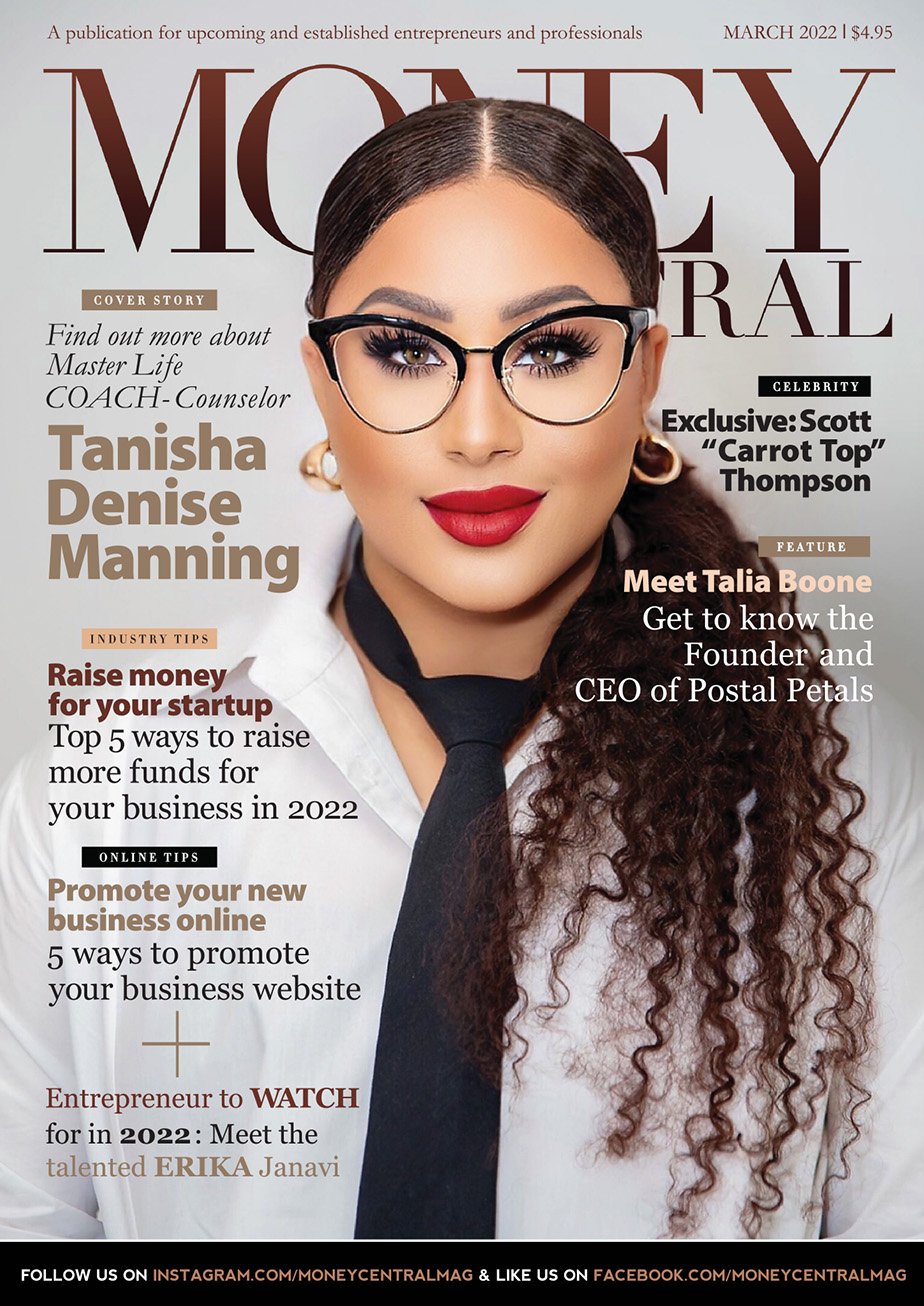
Meet The Woman Behind The Cover Of The March 2022 Issue Of MoneyCentral Magazine: Dr. Tanisha Denise Manning

A veteran entrepreneur, Dr. Tanisha Denise Manning, better known as “Wonder Woman,” is an inspirational game-changer with an impressive resume. She has built a career dedicated to public service – leveling the playing field for some of the most at-risk youth in various communities. She’s a “Light” combat veteran, a highly sought-after author, a motivational speaker, a Holistic Health practitioner, an International certified birth doula, a 1st HBCU (Historically Black College and University) certified life coach, a certified yoga instructor, a Forensic fingerprint and mortuary expert, a Juvenile Justice Advocate, a former deputy sheriff, as well as an active humanitarian. No wonder she was dubbed as “The Wonder Woman Life Coach” by Source Magazine in 2014 and featured as “The 2018 Wonder Woman of San Joaquin County.”

Raised amid rampant gang violence and poverty in South Stockton, California, Denise managed to claw her way out of poverty through sheer willpower. She overcame hardship and loss and actually succeeded where failure was almost a certainty. Thus, her life is a shining example of what the human spirit can endure and achieve as long as there’s determination and willpower.

When it comes to public service, Denise is undoubtedly in a league of her own. She has worked diligently for the Florida Department of Juvenile Justice, advocating for youthful offenders and creating their first re-entry and mentoring program in Tallahassee, Florida. She has established and facilitated several creative writing and poetry classes for young offenders already in the criminal justice system. In fact, Denise implemented the first poetry creative writing classes in Orlando, Florida, Killeen, Texas, and Stockton, CA, and has received numerous commendations for Outstanding Distinguished Service.

Back in 2015, Denise opened her business, “Pretty Lady Boutique.” The boutique provided services for women and housed a mentoring non-profit for teenage girls. She took to local schools and created “Pretty Lady Sisterhood” – she became the first in the city and school district to incorporate and implement a mentoring program for high-risk teenage girls. Because of her extensive public service, she has been featured for community service leadership in several print and online publications, television as well as various organizations and universities.

Fast forward to today, and Denise currently has over thirteen years of military service in the United States Army under her belt. She holds degrees in Criminal Justice Administration and Business Administration, and she has received an Honorary Ph.D. in Theology and Spiritual Counseling. Denise has also worked with various police departments in fingerprint analysis, crime scene processing, and violence prevention strategies. She holds membership in several prestigious social and civil organizations where she has been recognized as a Visionary Pearl and Charter President and she’s currently a Master Counselor/Life Coach. She’s also a new mother to a beautiful baby boy.

MoneyCentral magazine recently caught up with Denise to discuss her journey as an entrepreneur, and here’s what went down:

Can you tell us more about your life coaching journey since you’re a pioneer in the field?

Coaching and counseling was always a calling in my life. While deployed to Baghdad during Operation Iraqi freedom, I made up my mind that I was going to become a life coach; however, years prior, I had implemented programs and held coaching groups in local detention centers for high-risk youth. My passion for helping high-risk youth drove me to implement mentor coaching programs for state departments of juvenile justice, local city governments, juvenile detention centers, and federal correctional facilities for women.

As an entrepreneur, what is it that motivates and drives you?

There’s no better feeling than creating something from the ground up without someone telling you what you can and cannot do. I remember working a job and realizing I was giving them all my creativity for pennies. I didn’t particularly appreciate feeling used. I was motivated by freedom – the freedom to create, serve, and give back without restrictions.

What were your top three motivations for starting your business?

The need and passion for helping others. Being the person I needed when I was a troubled youth or young woman who was in need.

It has come to our attention that you made history as one of the first women to obtain a Master’s degree in “life coaching” – can you tell us more about this?

I started coaching before it became popular and saturated with people that didn’t have life experience or education. Life coaching degrees weren’t offered until 2016-2017, and I jumped on the first outstanding accredited program.

What are the three biggest challenges you have faced growing the business, and how did you overcome them?

Overcoming the fear of doubt. Understanding that oftentimes your worst enemy and worst critic is yourself.

You recently trademarked “Venting Session” as a service in your private counseling practice. Why did you feel the need to trademark this service, and what makes this service so unique?

Many people don’t want, can’t afford, or don’t trust therapy. I’m an advocate of therapy; however, I also understand that sometimes you just want to get something off your chest, get some unbiased advice without the hassle of insurance or high copays. Sometimes you need to talk to a professional with no strings attached, someone that relates and can identify with your situation. Someone other than your relatives or close friends – that’s me. Venting session is a 45-minute session that offers more than a space to let go but a space to heal and be heard, become grounded, and get a clear perspective on what’s next.

The Perfect Side Hustle For You, According To Your Star Sign